Traditional learning methods have long relied on textbooks, diagrams, and static illustrations to explain complex concepts. While these resources remain valuable, they often make it difficult for students to fully visualize subjects such as human anatomy, engineering, astronomy, chemistry, and biology. As education continues to embrace digital innovation, Augmented Reality (AR) is emerging as a powerful solution that transforms the way students learn by turning abstract concepts into interactive, three-dimensional experiences.
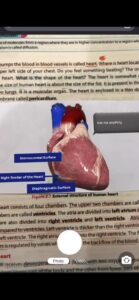
The sneak peek demonstrates how AR can revolutionize classroom learning. Instead of simply looking at a printed image in a textbook, students can point their smartphone or tablet at a page and instantly view a realistic 3D model that appears directly in their surroundings. Whether it’s a human heart, the solar system, or a mechanical component, learners can observe, rotate, and explore the object from every angle, making learning far more engaging than traditional methods.
Learning Beyond Static Images
Many educational topics require students to imagine structures and processes that cannot be easily understood through flat illustrations. AR bridges this gap by overlaying digital content onto the real world, allowing students to see objects as if they were physically present.
For example, when studying the human heart, students can:
- Visualize a lifelike 3D heart model.
- Observe its structure from different perspectives.
- Better understand the relationship between different chambers and vessels.
- Learn through interactive visual exploration instead of memorization.
This immersive approach helps transform difficult concepts into experiences that are easier to understand and remember.
Improving Student Engagement
One of the biggest challenges in education is maintaining student attention. Interactive content naturally captures curiosity and encourages active participation. Rather than passively reading information, students become explorers, interacting with educational content in real time.
AR creates learning experiences that are:
- More engaging than traditional textbooks.
- Interactive and hands-on.
- Easier to understand through visualization.
- Memorable due to immersive learning experiences.
This increased engagement often leads to improved knowledge retention and greater interest in the subject.
Making Complex Subjects Easier to Understand
Subjects like biology, medicine, engineering, architecture, and physics often involve concepts that are difficult to explain using words alone. Augmented Reality provides visual context that simplifies these topics by allowing students to see exactly how objects look and function.
Instead of imagining internal organs, molecular structures, or mechanical systems, learners can observe them directly in three dimensions, making abstract ideas more concrete and accessible.
The Future of Interactive Education
As digital learning continues to evolve, Augmented Reality is becoming an essential educational tool rather than a novelty. Schools, universities, training centers, and educational publishers are increasingly adopting AR to create richer learning experiences that combine the physical and digital worlds.
By integrating AR into textbooks and learning materials, educators can deliver lessons that are more interactive, immersive, and effective. Students gain a deeper understanding of complex topics while developing curiosity and enthusiasm for learning.
Conclusion
The sneak peek highlights the exciting potential of Augmented Reality in education. By transforming ordinary learning materials into interactive 3D experiences, AR enables students to visualize complex concepts with unprecedented clarity. From anatomy and science to engineering and beyond, this technology is redefining how knowledge is delivered and understood.
As educational institutions continue to adopt innovative teaching methods, Augmented Reality is set to play a significant role in creating classrooms where learning is not only informative but also immersive, engaging, and unforgettable.