Education is evolving rapidly, and traditional teaching methods are no longer enough to keep students fully engaged. Many scientific, medical, and engineering concepts are difficult to understand through textbooks and static images alone. Students often struggle to visualize how complex structures or processes work, leading to lower engagement and reduced knowledge retention.
Augmented Reality (AR) is transforming this learning experience by bringing educational content to life. Instead of simply reading about a concept, students can interact with realistic 3D models, making learning more immersive, engaging, and easier to understand.
Learning Beyond the Textbook
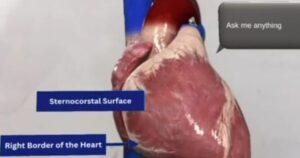
Imagine studying human anatomy by viewing a realistic 3D heart floating above a textbook page. Students can examine the organ from every angle, explore its individual components, and better understand how it functions. This interactive experience bridges the gap between theory and practical understanding, making even the most challenging topics easier to grasp.
By combining physical learning materials with digital content, AR enables educators to create lessons that are both memorable and highly engaging.
Creating Interactive Educational Experiences Made Simple
Modern AR platforms eliminate the technical barriers traditionally associated with developing immersive learning experiences. Educators and institutions can create AR lessons without extensive programming knowledge.
The process is straightforward:
- Upload an image from a textbook, worksheet, or educational material.
- Use the image as an AR recognition target.
- Add interactive 3D models, animations, videos, audio, or other digital content.
- Publish the experience instantly.
- Generate a QR code or share a link for students to access the lesson.
When students scan the image using their mobile device, the digital content appears directly on top of the printed material, transforming an ordinary page into an interactive learning experience.
AI powered AR
Improving Understanding Through Visual Learning
Many learners absorb information more effectively when they can see and interact with concepts rather than simply reading about them. AR supports visual and experiential learning by allowing students to:
- Explore realistic 3D models.
- Understand complex structures through interaction.
- Visualize abstract scientific concepts.
- Improve memory retention through immersive experiences.
- Learn at their own pace using interactive educational content.
This hands-on approach encourages curiosity and active participation, making learning more enjoyable and effective.
Applications Across Education
Augmented Reality has applications across virtually every educational discipline, including:
- Biology: Explore organs, cells, and body systems in 3D.
- Chemistry: Visualize molecules, chemical reactions, and atomic structures.
- Physics: Demonstrate forces, motion, and scientific experiments.
- Engineering: Examine mechanical components and system designs.
- Geography: Interact with maps, landscapes, and environmental models.
- Medical Education: Study anatomy and clinical procedures using lifelike 3D visualizations.
By transforming traditional educational materials into interactive experiences, AR helps students connect theory with real-world understanding.
The Future of Interactive Learning
As educational technology continues to evolve, Augmented Reality is becoming an essential tool for modern classrooms. It empowers educators to create engaging, visual lessons that improve comprehension while giving students a more immersive and enjoyable learning experience.
Rather than replacing traditional teaching methods, Augmented Reality in education enhances them by making difficult concepts easier to visualize, explore, and remember. Whether used in schools, universities, medical institutions, or corporate training programs, Augmented Reality is reshaping how knowledge is delivered and experienced.
The future of education is interactive, visual, and immersive—and Augmented Reality is leading the way.